

 English
 Español
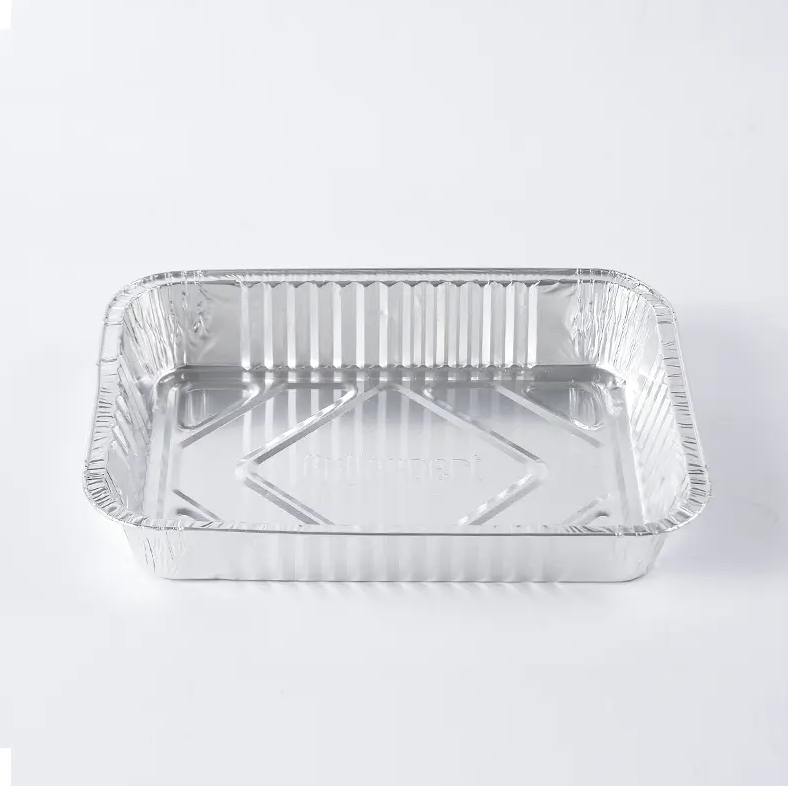
In terms of safety, barrier properties, and high-temperature adaptability, aluminum foil food containers are generally superior to ordinary plastic containers, making them more suitable for long-term storage, heating, or foods requiring high freshness. Plastic containers, on the other hand, have advantages in portability and low cost, making them suitable for short-term refrigerated storage.
Aluminum foil food containers offer stronger barrier properties.
In food storage, oxygen, moisture, and light are the three major factors leading to food spoilage.
Aluminum foil has a near 100% gas barrier rate. According to industry test data, aluminum foil with a thickness of 0.03mm or more has almost zero permeability to oxygen and water vapor, while ordinary food-grade plastics (such as PP and PET) have a certain degree of oxygen permeability. For example:
- The oxygen permeability of PP plastic is approximately 1500–2000 cc/m²·24h
- The oxygen permeability of aluminum foil is close to 0 cc/m²·24h
Under the same conditions, using aluminum foil food containers to seal and store cooked food, baked goods, or meat products can extend their shelf life by more than 30%. For foods requiring moisture and oxidation protection (such as braised dishes, pastries, and cold chain meals), aluminum foil food containers offer significant advantages.
High-Temperature Resistance Comparison: Aluminum Foil is Safer
Plastic containers are prone to deformation and even the release of potentially harmful substances at high temperatures. Although food-grade PP plastic can withstand temperatures up to approximately 120℃, in practical use:
- Prolonged microwave heating can lead to plastic aging.
- Fat foods may experience accelerated plastic decomposition at high temperatures.
In contrast, aluminum foil food containers can withstand temperatures exceeding 600℃ without burning or deforming, making them suitable for:
- Oven baking
- Open flame heating (some specifications)
- High-temperature sterilization processes
In airline catering, chain restaurant central kitchens, and the pre-prepared food industry, aluminum foil food containers are widely used for secondary reheating and delivery due to their high-temperature resistance.
Food Safety Stability Analysis
The chemical stability of food storage materials directly affects food safety.
Plastic containers typically require the addition of plasticizers or stabilizers to improve performance. While standard food-grade plastics meet national standards, there is still a risk of metal migration when storing oily or acidic foods (such as tomato products and pickles) over long periods.
Aluminum foil food containers offer the following advantages:
- They are plasticizer-free
- They do not absorb oils
- They do not chemically react with most foods
According to EU food contact material testing standards, the metal migration of compliant aluminum foil containers is far below safety limits, making them suitable for storing high-oil and high-salt foods.
Environmental Comparison and Recyclability
Environmental performance has become a crucial consideration for the food packaging industry in recent years.
The global average plastic recycling rate is less than 10%, and the recycling process is complex. Some single-use plastics are difficult to degrade, causing long-term environmental stress.
Aluminum, on the other hand, offers several advantages:
- Aluminum can be recycled at a rate of over 75%
- Recycling and reuse consumes only 5% of the energy required to produce virgin aluminum
- It can be reused an unlimited number of times without performance degradation.
Under the "dual carbon" goal (carbon reduction and recycling), more and more food companies are choosing aluminum foil food containers to enhance their brand's environmental image.
Comparative Analysis of Actual Application Scenarios
Different usage scenarios determine material selection.
Suitable Scenarios for Plastic Containers:
- Short-term refrigerated fruits or vegetables
- Room-temperature dry goods storage
- Lightweight takeout packaging
Scenarios More Suitable for Aluminum Foil Food Containers:
- Pre-cooked dishes requiring high-temperature heating
- Baked goods takeout
- High-end restaurant packaging
- Airline and high-speed rail catering
- Long-term cold chain transportation of food
For example, after a chain bakery brand switched to aluminum foil food containers, customer feedback showed a decrease in product moisture absorption of approximately 40% and a significant reduction in return rates.
Does Cost Factor Determine the Choice?
From a unit cost perspective, ordinary plastic containers are typically 10%–20% cheaper than aluminum foil food containers. However, considering:
- Food spoilage rate
- Return rate
- Heating compatibility
- Brand image enhancement
In the long run, the overall cost advantage of aluminum foil food containers is more significant, especially suitable for mid-to-high-end markets and large-scale production enterprises.
How to Make a More Reasonable Choice?
If the goals are safety, good preservation, high-temperature heating capability, and environmental recyclability, aluminum foil food containers are clearly more advantageous.
If the demand leans towards low cost, short-term storage, and easy transportation, plastic containers still have practical value.
However, with the current trend in the food industry towards safety upgrades and green packaging transformation, aluminum foil food containers are becoming the preferred solution for an increasing number of companies. Choosing the right materials not only affects food quality but also directly impacts brand competitiveness and consumer trust.