

 English
 Español
The thickness of household aluminum foil rolls you choose mainly depends on your cooking needs. Generally, the common thicknesses on the market range from 10 micrometers (μm) to 20 micrometers. For everyday wrapping of leftovers or easily cooked ingredients like sweet potatoes and potatoes, a standard 10-12 micrometer thickness is sufficient; however, for oven baking meats, fish, or camping barbecues, it is recommended to choose a thicker 15-20 micrometer foil to prevent tearing or uneven heating.
Understanding the different thickness levels of household aluminum foil rolls
When buying household aluminum foil rolls, the thickness is usually indicated on the packaging. To help you choose wisely, we can divide them into three main levels:
1. Standard (10μm - 12μm)
This is the most common type found in supermarkets. It has average toughness and is the most affordable.
Suitable for: Covering bowls and plates to prevent dust, wrapping refrigerated food, and wrapping vegetables with high water content for simple baking.
Disadvantages: Easily tears and is not suitable for wrapping meat with sharp bones.
2. Thickened (15μm - 18μm)
This is currently considered the "all-purpose" thickness for household aluminum foil rolls. It is stronger than the standard type and conducts heat more evenly.
Suitable for: Baking chicken wings, ribs in the oven, and wrapping tart molds.
Advantages: Better sealing, effectively locks in meat juices, and is less likely to burn.
3. Extra Thick (20μm and above)
Often referred to as "barbecue grade" or "industrial grade" thickened foil.
Suitable for: Outdoor charcoal grilling, roasting lamb legs, and making foil-wrapped ribs.
Advantages: Extremely high heat resistance and tensile strength; it is not easily melted even when in direct contact with charcoal.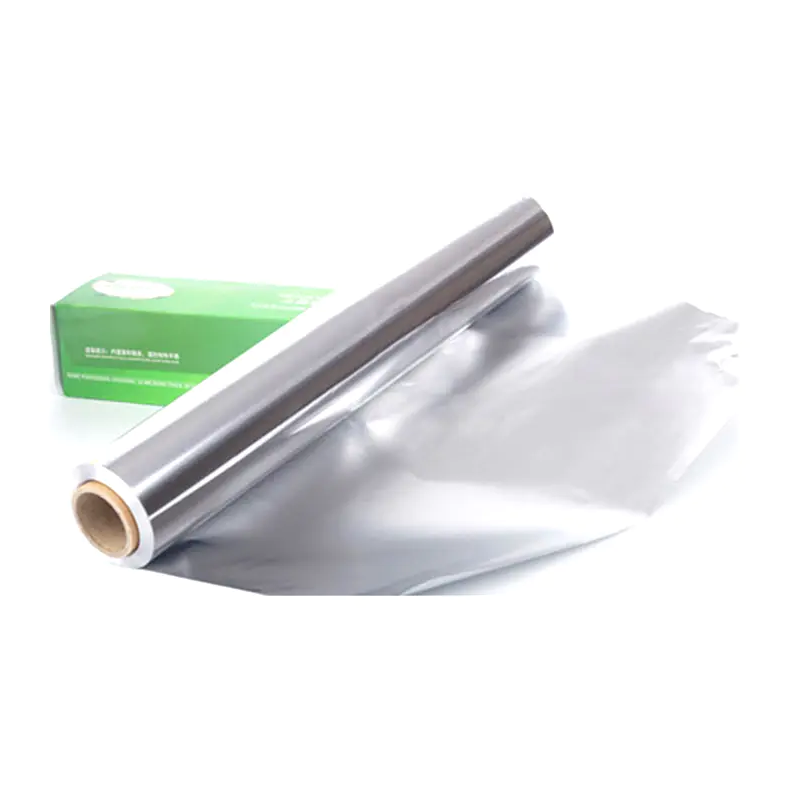
Why is choosing the right thickness important?
Choosing the right thickness of household aluminum foil roll not only affects the taste of the dishes but also the lifespan of your cookware:
Preventing oil leakage: If the aluminum foil is too thin, oil will leak onto the baking pan during baking, which is not only difficult to clean, but long-term accumulation can also damage the oven coating.
Even Heating: Thicker aluminum foil provides better heat conduction and buffering, preventing the food surface from burning while the inside remains undercooked.
Locks in Flavor: The thicker foil creates a tighter seal, utilizing the principle of steam circulation to keep the meat tender and juicy.
Tips for Choosing Household Aluminum Foil Rolls
Besides thickness, consider the following when choosing high-quality household aluminum foil rolls:
Check the Material: Ensure the product is labeled "food-grade aluminum foil" and does not contain heavy metal impurities.
Check the Surface: High-quality aluminum foil has a smooth surface with no black spots or creases, and tears smoothly without curling.
Note the Sides: Although the thickness is the same, it is recommended to use the matte side in contact with the food and the shiny side facing outwards for more even heating.
For most families, a roll of household aluminum foil around 15 microns thick is the most cost-effective option, suitable for both daily food preservation and home baking.