

 English
 Español
The biggest differences between Aluminum foil food containers and plastic containers lie in safety, temperature resistance, environmental friendliness, and usage scenarios. Compared to plastic containers, aluminum foil food containers offer advantages such as high temperature resistance, no release of harmful substances, and high recyclability. Therefore, they are widely used in takeout, baking, airline meals, and food processing industries, while plastic containers are more commonly used for low-temperature or short-term food packaging.
I. Different Material Properties Determine Differences in Safety Levels
Aluminum foil food containers are typically made of food-grade aluminum alloy materials (such as 3003/8011 aluminum foil), which can directly contact food and comply with international food safety standards such as FDA and LFGB. In high-temperature environments, the aluminum foil material remains stable and does not release harmful chemical substances.
In contrast, plastic containers are mainly made of materials such as PP, PET, and PS. Although some plastics are labeled as "food-grade," there may still be a risk of leaching in high-temperature, oily, or acidic food environments, especially under microwave or high-temperature heating conditions.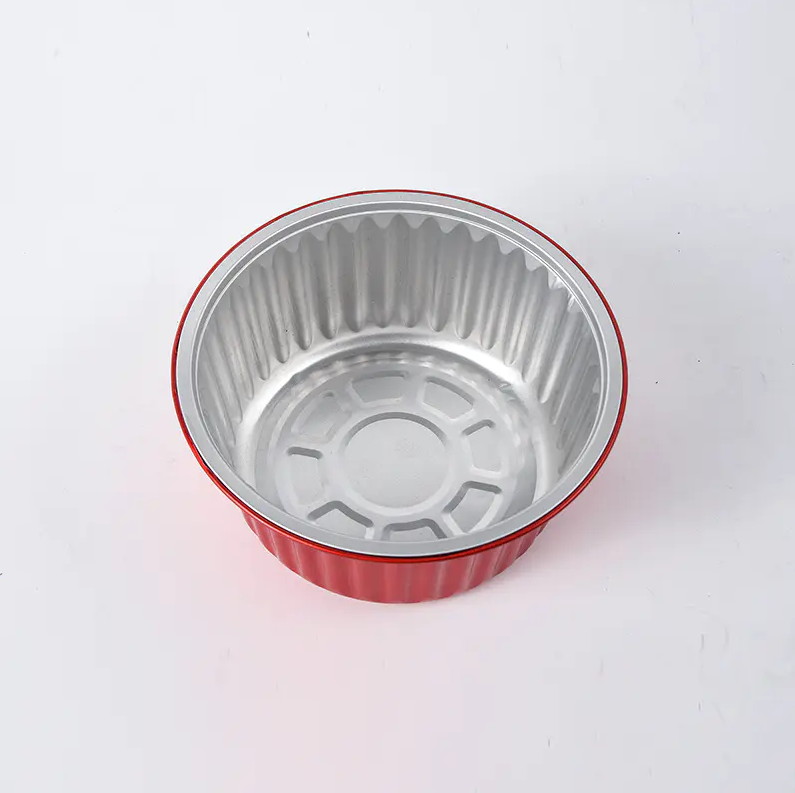
II. Significant Differences in High-Temperature Resistance
In terms of heat resistance, aluminum foil food containers have a particularly significant advantage:
Aluminum foil food containers can be used directly in ovens, steamers, and for indirect heating over open flames.
They can withstand temperatures above 250℃.
Suitable for baking, grilling, and hot food takeout.
Most plastic containers:
Are only suitable for normal or low-temperature environments.
Easily deform and melt at high temperatures.
Not suitable for ovens and prolonged heating.
Because of this, more and more catering brands are prioritizing aluminum foil food containers for hot food packaging.
III. Comparison of Environmental Friendliness and Recyclability
Under the current "plastic ban" and sustainable packaging trends, aluminum foil food containers are considered an important alternative to plastic containers.
Aluminum foil food containers are 100% recyclable.
The recycling process has extremely low performance loss.
Complies with circular economy and environmentally friendly packaging requirements.
Plastic containers:
Have a low recycling rate.
Have a long decomposition cycle.
Cause a long-term burden on the environment.
From an environmental perspective, the acceptance of aluminum foil food containers in the global market is continuously increasing.
IV. Different Usage Scenarios and Applicable Industries
| Comparison Item | Aluminum Foil Food Containers | Plastic Containers |
| High-Temperature Heating | Suitable | Not Recommended |
| Oven Use | Supported | Not Supported |
| Takeaway Packaging | Safer for Hot Food | Mainly for Cold Food |
| Frozen Storage | Supported | Supported |
| Airline Meals / Baking | Commonly Used | Rarely Used |
Aluminum foil food containers are more suitable for professional catering, food processing, and export markets, while plastic containers are more commonly used for convenient, low-cost daily packaging.
V. Differences Between Cost and Long-Term Value
While plastic containers generally have a lower unit cost, when considering factors such as food safety, brand image, regulatory risks, and environmental responsibility, aluminum foil food containers offer greater value in the long run.
Especially when exporting to European and American markets, choosing Aluminum foil food containers that meet international standards can effectively reduce compliance risks and increase product added value.
Aluminum foil food containers are significantly superior to plastic containers in terms of safety, heat resistance, environmental friendliness, and professional application scenarios. As consumers' concerns about food safety and environmentally friendly packaging continue to grow, aluminum foil food containers are becoming an important development direction for the catering and food industries.