

 English
 Español
In the modern food industry, PE Plastic Wrap has become an important packaging material due to its excellent temperature resistance, transparency, and moisture resistance. Whether for household packaging or industrial-grade food packaging, PE Plastic Wrap effectively extends the shelf life of food, ensures food safety, and enhances product aesthetics. This article will analyze in detail the main applications and advantages of PE Plastic Wrap in the food industry.
Food Preservation Packaging: Extending Shelf Life
PE Plastic Wrap is widely used in fresh food packaging. For example, fresh fruits, vegetables, and meats are commonly packaged with PE film for preservation. The low air permeability and waterproof properties of PE film reduce moisture evaporation and air oxidation, delaying food spoilage.
According to industry data, strawberries packaged with PE Plastic Wrap can have their shelf life extended from 3 days to more than 7 days under refrigeration, while the shelf life of beef packaged with PE film can be increased by about 30%. This preservation effect not only reduces food waste but also improves distribution efficiency.
Microwave Food Packaging: Safe and Convenient
Modern households and the catering industry increasingly rely on microwave heating for food, making PE Plastic Wrap an ideal choice due to its high-temperature resistance. High-quality PE film can withstand temperature variations from -40°C to 100°C, making it suitable for microwave heating.
For example, pre-prepared ready-to-eat meals often use PE film combined with other composite materials to ensure no harmful substances are released during heating, while maintaining the food's moisture and texture. Compared to traditional paper or ordinary plastic packaging, PE film is safer and more reliable.
Vacuum Packaging and Modified Atmosphere Packaging: Enhancing Food Safety
PE Plastic Wrap is commonly used in vacuum packaging and modified atmosphere packaging (MAP) technologies. In vacuum packaging, PE film effectively isolates the food from air, reducing the risk of oxidation and microbial growth. In MAP, PE film can be combined with composite films to control the gas ratio inside the packaging, extending the food's shelf life.
For example, when using PE film for vacuum packaging of cooked meat, the total microbial count can be reduced by approximately 40%, significantly improving food safety and facilitating long-distance transportation and storage.
Frozen Food Packaging: Strong Low-Temperature Resistance
PE Plastic Wrap performs exceptionally well in frozen food packaging. Its low-temperature resistance prevents frost formation, cracking, or sticking, ensuring food remains intact in frozen environments below -18°C.
For example, frozen vegetables, seafood, and dumplings are often packaged with PE film with a thickness of 20-50 microns, reducing breakage rates during cold chain transportation and facilitating consumer access.
Transparent Display Packaging: Enhanced Sales Experience
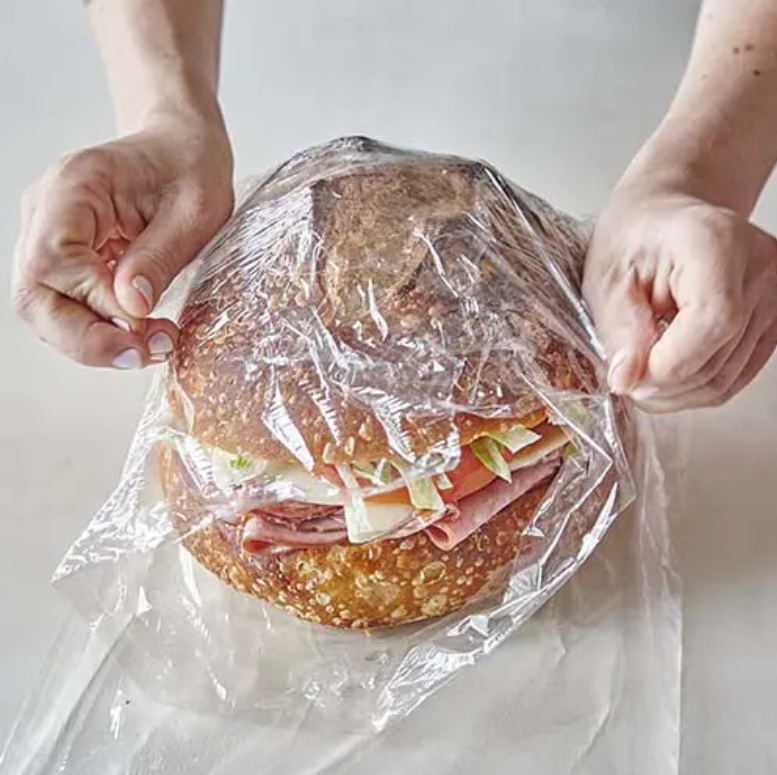
PE film's excellent transparency and gloss make it ideal for food display packaging. Transparent packaging allows consumers to visually inspect the food, increasing their desire to purchase. For example, bread, pastries, nuts, and other snacks are often packaged with transparent PE film, combined with color-printed labels, which not only protects the food but also enhances the product's visual appeal.
Data shows that transparent packaging can have a 15%-20% higher sales conversion rate than ordinary opaque packaging, giving it a significant advantage in the retail market.
PE Plastic Wrap has a wide range of applications in the food industry, playing an irreplaceable role in everything from preservation, packaging, and microwaveable food packaging to vacuum, frozen, and display packaging. As consumers continue to demand higher levels of food safety and convenience, the application of PE film in the food packaging sector will continue to expand, driving the entire food industry towards higher efficiency, safety, and green practices.