

 English
 Español
With the explosive growth of the food delivery industry and the widespread use of pre-cooked meals at home, Aluminum Foil Food Containers are gradually replacing traditional plastic lunch boxes and becoming the preferred choice for green packaging due to their excellent high and low temperature resistance, 100% recyclability, and superior preservation capabilities.
1. Observe the Appearance and Surface Finish
High-quality aluminum foil food containers should first and foremost have a good visual texture.
Smoothness: The surface of a high-quality product should be flat, without wrinkles, obvious black spots, or scratches. The aluminum foil surface should have a uniform metallic luster.
Edge Treatment: Observe the edges of the container. Full-curl or IVC (Integrated Curved Edge) finishes from high-quality manufacturers should be smooth, neat, and free of burrs. This is not only about aesthetics but also prevents cuts to fingers during use.
Stamping Texture: Check whether the reinforcing ribs on the side walls and the stamping texture on the bottom of the container are clear and uniform. A well-designed structure significantly improves the compressive strength of Aluminum Foil Food Containers, ensuring they are less prone to deformation when loaded with heavy objects or stacked.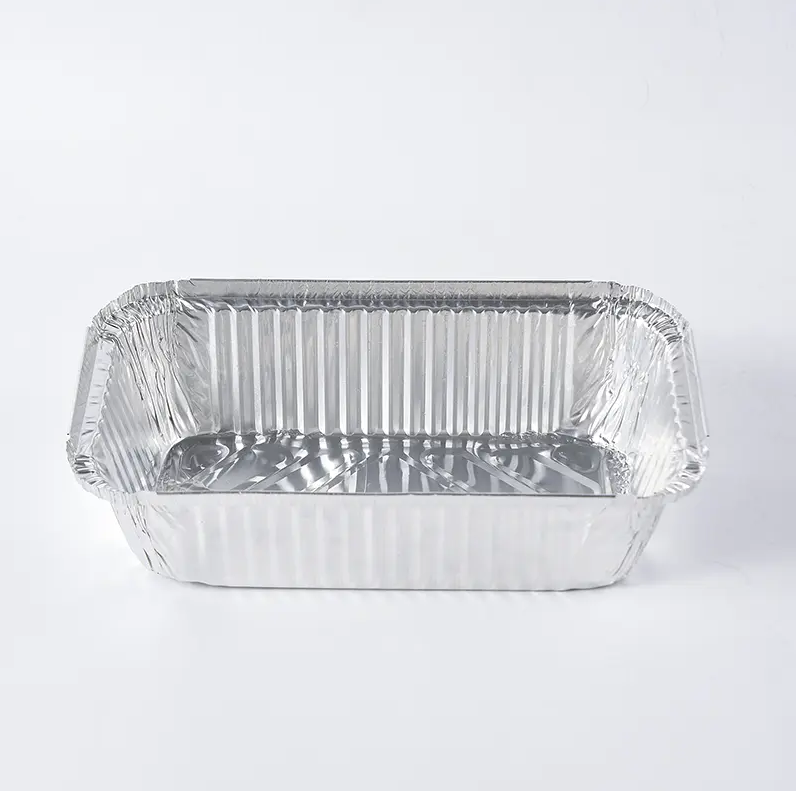
2. Check the material's hardness and thickness
The quality of aluminum foil food containers directly depends on the aluminum foil material used (usually 3-series or 8-series alloys).
Toughness test: Gently squeeze the edge of the container. Inferior products often collapse or break easily due to insufficient thickness or excessive impurities. High-quality containers should have a certain degree of resilience, maintaining their basic shape under stress.
Uniformity: Good aluminum foil food containers have a uniform thickness distribution. If the bottom of the container is extremely thin while the sides are thick, it indicates improper control of the stretching process during stamping. Such products are prone to uneven heating when heated.
3. Check odor and cleanliness
As packaging materials that come into direct contact with food, the hygiene indicators of aluminum foil food containers are crucial.
Odorless: High-quality aluminum foil food containers should be odorless and non-toxic. If a strong industrial oil odor is detected upon opening the packaging, it indicates that the stamping lubricant used in production is not food-grade, or that the cleaning and degreasing process is substandard, which directly contaminates food safety.
Surface Residual Oil: Touching the inner wall of the container should not leave a noticeable sticky feeling. Qualified products should meet food-grade cleanliness standards, ensuring that no harmful substances are released when holding hot food.
4. Verify Safety Qualifications and Certifications
For enterprise-level procurement, reviewing the supplier's testing reports is the most scientific way to determine the quality of Aluminum Foil Food Containers.
Authoritative Endorsement: Confirm whether the product has passed FDA (U.S. Food and Drug Administration) certification, LFGB (German Food Hygiene Standard) testing, or complies with the domestic GB 4806.9 National Food Safety Standard.
Temperature Resistance: Qualified aluminum foil containers should remain stable between -20°C and 250°C. You can request the supplier to provide a heat resistance test report to ensure its safety in ovens, air fryers, or microwave ovens.
Choosing high-quality aluminum foil food containers not only enhances the perceived quality of your meals but also demonstrates your commitment to food safety and environmental responsibility. When purchasing, it is recommended to prioritize brand manufacturers with their own factories and complete production qualifications, allowing you to control raw materials and the production process from the source.