

 English
 Español
With the rise of takeout and pre-prepared meals, aluminum foil food containers are increasingly popular with the restaurant industry and consumers due to their high-temperature resistance, excellent heat retention, and oven-safe properties.
Safety of Aluminum Foil Containers
Aluminum foil food containers are made of extremely pure aluminum alloy, which undergoes a refined process during the production process. From a modern food safety perspective, qualified aluminum foil food containers are safe for direct food contact and are widely used in a variety of applications, including airline meals, bakery products, and takeout packaging.
National standards have strict regulations for aluminum foil used in food packaging, ensuring that its heavy metal content (such as lead, cadmium, and arsenic) meets safety standards. Under normal use, a dense aluminum oxide protective film forms on the surface of aluminum foil. This chemically stable film effectively prevents further dissolution of aluminum ions.
Aluminum Ion Leaching and Food Types
Concerns regarding aluminum ion leaching primarily focus on the following situations:
Acidic/High-Salt Foods: When aluminum foil food containers come into contact with highly acidic (such as vinegar, ketchup, and lemon juice) or high-salt foods, the aluminum oxide coating may corrode, potentially leading to trace amounts of aluminum ion leach.
Improper Cooking: In rare cases, using non-food-grade or low-quality aluminum foil, or cooking for extended periods or at high temperatures, can increase aluminum leach.
However, it should be noted that even if trace amounts of aluminum leachate, the absorption rate of aluminum by the human digestive tract is very low (typically less than 1%). Most absorbed aluminum is excreted through urine. The World Health Organization (WHO) has established safe guideline values for aluminum intake in food. Generally, aluminum intake from properly prepared aluminum foil containers is well below these safe limits.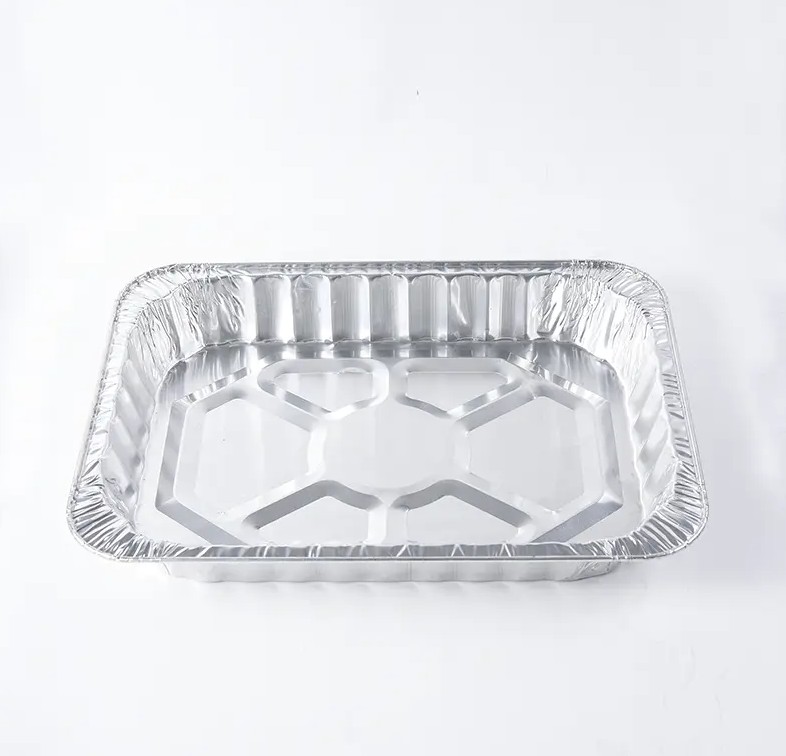
How to Use Aluminum Foil Food Containers Safely
To maximize health and food safety, we recommend that consumers and food service operators follow the following guidelines:
- Avoid long-term storage of acidic/high-salt foods: Avoid storing highly acidic or high-salt foods, such as lemon juice, pickles, and vinegar, in aluminum foil food containers for extended periods, especially in high-temperature environments.
- Choose qualified products: Ensure that the aluminum foil food containers you use are high-quality, manufactured by a reputable manufacturer and meet national food contact material standards.
- Do not microwave: Aluminum foil is a metal material and should never be heated in a microwave to prevent sparks, which could damage the appliance or create a dangerous situation. It should only be used in ovens, air fryers, steamers, and other heating methods.
Environmental Advantage: Recyclability of Aluminum Foil Containers
In addition to food safety, aluminum foil food containers are also a major environmental benefit. Compared to composite materials or some plastics, aluminum is a material with extremely high recyclability and can theoretically be recycled and reused indefinitely. Choosing aluminum foil containers can effectively reduce plastic waste and contribute to sustainable development and environmental protection.
When used correctly, aluminum foil food containers are a safe and hygienic food packaging option. Consumers do not need to worry too much about their long-term effects on human health. The key is to choose high-quality aluminum foil food containers and avoid using them to store highly acidic or alkaline foods for a long time.